Why Does My Voice Sound Weird with Hearing Aids? Occlusion Explained
So you just got your new hearing aids, you put them in and the first time
By: admin | February 27, 2026
So you just got your new hearing aids, you put them in and the first time you talk, something feels really off. Your voice doesn’t sound like you anymore. It’s hollow, kind of echoey or just plain strange in a way that’s hard to describe but impossible to ignore.
Nobody mentioned this would happen, and it throws you off because you were expecting to hear other people better, not for your own voice to suddenly sound weird.
Some people adjust to it pretty quickly and stop noticing after a few days. Others find it so distracting that they seriously question whether they can get used to wearing these things.
When your voice doesn’t sound right, it messes with you more than you’d think. You’re suddenly way too aware that you have something stuck in your ears. You might find yourself talking less, avoiding phone calls or feeling self-conscious when you need to speak up in a meeting.
The good news is that this issue has a name, it’s completely normal and there are real ways to fix it so your voice sounds like yourself again.
Hearing aids work by picking up sound through tiny microphones, processing it and then delivering a clearer signal into your ear. They are designed to make speech and everyday sounds easier to hear, especially the sounds your ears have started missing.
When you speak, your voice travels two ways at once. Sound moves out into the room, and vibrations also travel through your jaw and skull directly to your inner ear. Before hearing aids, your brain relied heavily on those internal vibrations to judge how your voice sounded.
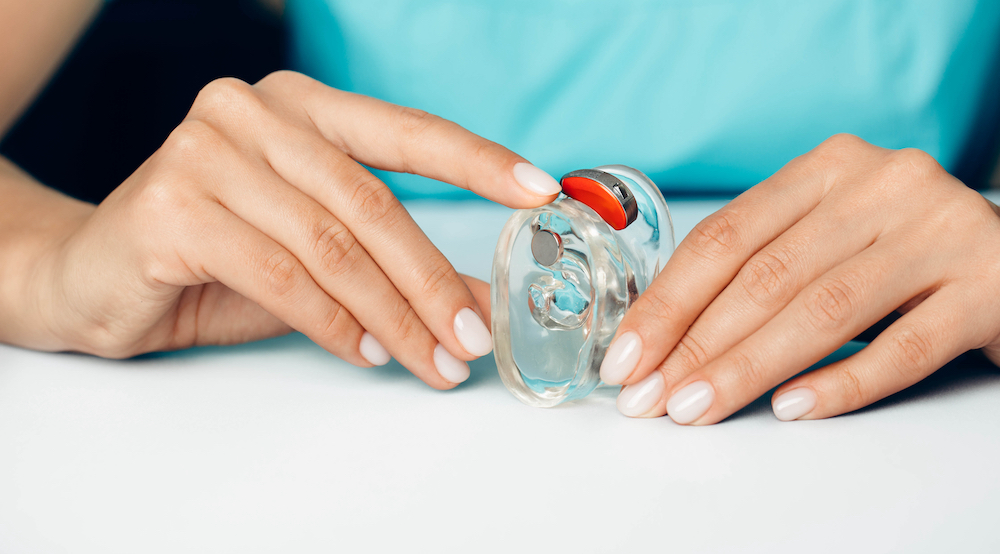
When a hearing aid sits in your ear canal, that balance can shift. Occlusion happens when the ear canal is partly blocked by the device, which causes those internal vibrations to reflect back toward your eardrum instead of escaping the ear as they normally would. As a result, your voice can sound louder, deeper or slightly hollow.
Many people describe it as hearing themselves talk inside their head, even though others do not notice any change at all.
The style and fit of the hearing aid affect how noticeable this feels. Devices that fill more of the ear canal often create more of this sensation, while open fittings or vents allow sound to move more naturally and reduce that boxed-in feeling.
Your brain also needs time to adjust. As you wear hearing aids more consistently, your brain relearns what your voice sounds like with amplified sound.
For most people, that adjustment happens gradually, and the sound of their own voice starts to feel normal again with time and small fine-tuning adjustments if needed.
The first thing most people notice with hearing aids is that the world feels louder in places they forgot had sound. The fridge, the heat kicking on, footsteps in the house. None of those sounds are new. You just have not heard them clearly in a while, so they grab your attention at first.
That settles down with time. Your brain learns what it needs to focus on and what it can tune out again. Voices start to feel easier to follow, and background noise stops stealing all your energy.
After a bit, those everyday sounds stop feeling strange and start feeling normal again. Most people reach a point where they are not thinking about the sounds at all. They just notice that listening takes less work.
Hearing begins when sound enters the ear canal and reaches the eardrum. The eardrum moves in response, setting off a chain reaction. Tiny bones behind the eardrum pass those movements along to the inner ear.
Inside the inner ear, special cells turn the vibrations into signals that travel to the brain. The brain then makes sense of those signals as voices, music or background noise.
When this process runs smoothly, hearing feels automatic and easy. When something changes along the way, sound may feel muffled, unclear or harder to follow.
An audiologist looks at each part of this pathway to understand where sound may be getting altered and how that change affects what you hear day to day.
Putting on hearing aids for the first time can be a little strange, especially when you hear yourself talk. Your voice may sound louder, fuller or just different enough to catch your attention. This reaction is common and often one of the first things people notice once amplification is introduced.
The reason this happens is tied to how sound reaches your ears and how your brain is used to hearing your own voice. Hearing aids change that sound pathway, which can temporarily shift how familiar your voice feels.
Most people notice their voice starts to feel more like themselves again. What sounds odd at first usually fades into the background as your brain adapts to the new way sound is reaching your ears.
Open-fit hearing aids use a small, vented dome that sits in your ear canal and leaves part of it open. This style allows more natural sound and airflow, which can help reduce the echo-like effect or fullness some people notice with their own voice.
Closed-fit hearing aids use an earpiece that seals off most or all of the ear canal. This design blocks more outside sound but may increase the sensation of occlusion, making your voice sound louder or more hollow.
Many people feel surprised or even uncomfortable when they first hear their own voice with new hearing aids. Some describe their voice as sounding too loud, hollow or different from what they remember. This reaction is normal for most new users.
Some people find it amusing how their voice sounds, while others worry that something might be wrong with their devices.
It often takes a few days or weeks for your brain to adjust to this change in sound. With regular use, your voice usually starts to feel more familiar again.
A few people may find the change in their own voice distracting at first, but this feeling tends to fade over time. If the sensation remains strong, your specialist can often make small adjustments to help improve comfort and sound quality.
Getting used to the sound of your own voice with new hearing aids usually takes some time. Most people notice that their voice sounds different at first, but this is a normal part of getting used to wearing the devices.
For many, it takes a few days to several weeks for their brain to become familiar with the new sound. During this period, your brain is learning how to process and accept the way your voice now reaches your ears.
With regular use and patience, most people find that their own voice starts to feel more natural again. These changes are temporary for most users.
Hearing your own voice sound different can be one of the most noticeable parts of wearing hearing aids. Even when other sounds feel clearer, your voice may suddenly stand out in a way that feels unfamiliar or distracting. This reaction is common and does not mean something is wrong.
Your ears and brain are adjusting to sound arriving in a new way, and a few simple habits can help that adjustment feel easier:
Most people find that this phase passes with time. As your brain adjusts, your voice usually fades back into the background and starts to feel like your own again instead of something you notice with every word.
Your hearing aids should deliver sound in a way that feels natural, including how your own voice sounds. Sometimes, though, changes in the way your voice comes through can signal that something isn’t quite right with the fit of your device.
Some signs a change in your voice sound could mean a fitting problem include:
You should monitor these signs closely so you know exactly when to check in with your audiologist. Early fixes for any fitting issues will keep your hearing aids performing properly. This makes your daily life and conversations feel much more natural.
Occlusion is that annoying sensation where your own voice sounds like it is echoing inside a barrel or a tunnel. It happens because the hearing aid acts like a plug, trapping the vibrations of your voice inside your ear canal instead of letting them escape.
A specialist handles this by literally giving that trapped sound an exit strategy. They can drill a small hole called a vent into the earmold or switch you to a different type of tip that does not seal your ear so tightly.
This lets the low tones of your voice come through naturally while keeping everything else clear.
The audiologist can also dive into the software to tweak how the microphones handle your speech. Some high-end hearing aids actually have a feature that recognizes your specific voice and turns the volume down the split-second you start talking.
If the physical vent and the software settings still do not do the trick, they might change the physical style of the device entirely to something more open.
Your new hearing aids are helping you hear better, but it’s normal for your own voice to feel off at first. That hollow or echoey sensation doesn’t mean something is wrong with you or the devices. It’s just your ears and brain adjusting to the way sound is delivered.
If your voice still feels strange or distracting after a few days, our audiologist can help fine-tune the fit or settings so it feels right. Doc Side Audiology in Florida is ready to support you at Longboat Key: (941) 366-2240, Sarasota: (941) 366-2240 or Sun City Center: (813) 588-6198.
Reaching out early helps you settle into your new hearing aids and get your voice back to sounding like you.
So you just got your new hearing aids, you put them in and the first time
By: admin | February 27, 2026
Virtual meetings are now a regular part of work, school and staying in
By: admin | December 21, 2025

Understanding your hearing health can be challenging, especially if you
By: admin | August 21, 2025